
The short answer: In 2026, commercial cleaning in New York City typically runs $0.12–$0.30 per square foot per visit, or roughly $1–$2 per square foot per year for recurring service once you factor in frequency. Hourly work lands around $30–$75+ per cleaner-hour. A standard 5,000 sq ft office cleaned five nights a week generally costs $2,600–$4,800 per month. But “commercial cleaning” can mean anything from a quiet law office to a hospital wing. So your real cost depends on the facility type, cleaning frequency, and scope. It depends less on square footage alone.
NYC cleaning is quoted three ways, and it helps to recognize which one you’re looking at:
A useful rule of thumb: most NYC offices spend about $1 to $2 per square foot each year. This covers recurring cleaning after you set the frequency.
Two forces do most of the work. First, labor. Cleaning is a labor business – most of your invoice is wages, payroll taxes, insurance, and supervision, not cleaning product. New York’s $20.00 per hour minimum wage sets a pay floor above most of the country. Competition for reliable crews in the five boroughs pushes costs even higher.
This is why the true cost of any service is mostly the full cost of its people. This lesson shows up far beyond cleaning. The gap between a worker’s headline rate and their true cost is a common trap. It happens after you add overhead, benefits, and idle time. Agencies face the same problem. They may find that the fully-loaded cost of their contract labor is 30–50% higher than the quoted rates. In cleaning, that math is your price.
Second, building logistics add costs. These include after-hours access and freight elevator scheduling. They also include insurance certificates and security clearances. Some buildings also require union labor or prevailing wages. A suburban strip mall never has these costs.
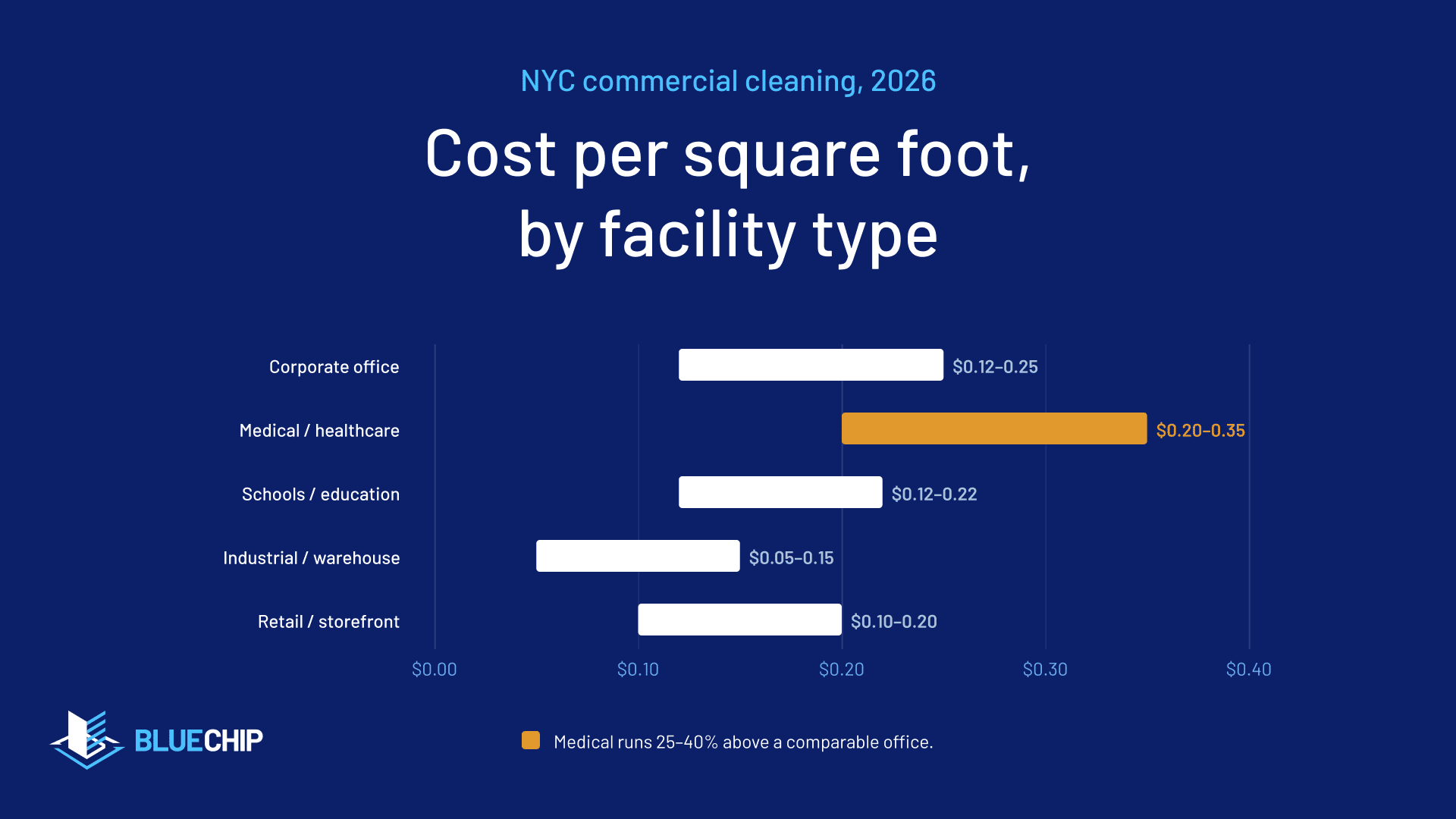
| Facility type | Typical range (per sq ft / visit) | Why |
|---|---|---|
| Corporate / professional office | $0.12–$0.25 | Baseline; open layouts cheaper than segmented ones |
| Medical / healthcare | $0.20–$0.35 | Compliance, disinfection protocols, documentation |
| Schools / education | $0.12–$0.22 | High volume, heavy restroom and floor-care load |
| Industrial / warehouse | $0.05–$0.15 (open area) | Low rate on big open floors; specialized tasks priced separately |
| Retail / storefront | $0.10–$0.20 | High-touch, customer-facing, frequent service |
Corporate offices. The baseline most quotes are built around. Density of desks, number of restrooms, and kitchen/pantry areas move the number more than raw square footage. (See typical office cleaning frequency by facility type for how cadence affects the total.) Explore office building cleaning for what a standard scope includes.
Medical and healthcare. The clear premium category is generally 25–40% above a comparable office. This is because the work is infection control, not just appearance. It includes hospital-grade disinfectants, room-by-room protocols, and documentation that holds up to an inspection. See medical group cleaning.
Schools and education. Square footage is high and so is restroom and cafeteria load, plus heavy floor care cycles (gym floors, VCT corridors). Per-square-foot rates look moderate, but volume and frequency drive the contract. See school cleaning.
Industrial and warehouse. Large open floors have the lowest per-square-foot rate because of economies of scale. But specialized tasks, like degreasing, high-bay work, and machinery areas, are scoped and priced separately. See industrial center cleaning.
A lower number often means a thinner scope or a cheaper labor model, not a better deal. Two quotes for the same building can differ by 30%. This can happen because one company cleans three nights, not five. It can also happen if they use rotating subcontractor crews. Another company may use trained employees instead. Before you compare prices, it pays to read a cleaning quote line by line. Confirm you are comparing the same scope. Also confirm it uses the same kind of workforce. Blue Chip’s self-performed, W-2 model is built so the price you see reflects the accountability you actually get.
Because labor is the key cost, it helps to see a common issue.
Every service business faces a tradeoff between cost and control. Marketing teams run the numbers on a fractional, agency, or in-house team. Software teams weigh the budget impact of in-house versus outsourced quality assurance. Companies that need specialized skills on flexible terms use pre-vetted talent priced by the hour or project. The pattern is the same as picking a cleaning vendor. The lowest hourly rate almost never wins. That changes once you include consistency, oversight, and rework costs.
Per-square-foot ranges are for budgeting, not for signing. The only way to a real price is a walkthrough: square footage, layout, restroom count, floor types, frequency, and any specialty work. A good vendor will document the scope so your quote is comparable to anyone else’s.
Get a real, itemized number. Request a free estimate from Blue Chip – we’ll walk your facility, document the scope, and show what’s included. We’ll also tell you who will do the work.
© 2026 Blue Chip Building Maintenance | Privacy
This site is protected by reCAPTCHA and the Google Privacy Policy and Terms of Service apply.