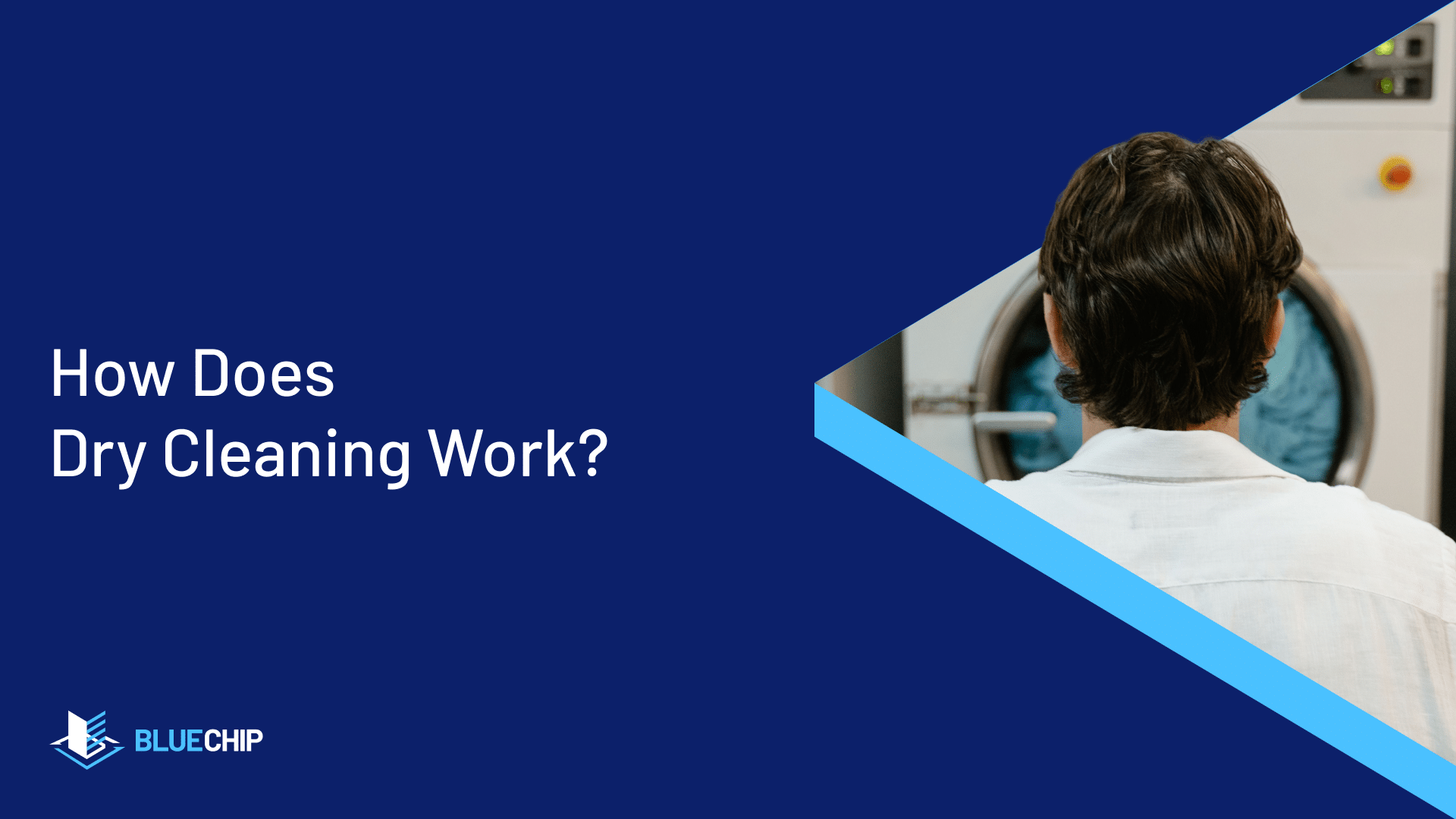
If you are a facility manager or business owner, you know that professional image is a critical investment. Maintaining high-value textiles and uniforms requires more than a standard wash. Dry cleaning is a technical misnomer because the process is not actually dry. Instead, it is a sophisticated chemical and mechanical cycle. Understanding how dry cleaning works helps you protect your textile assets and your bottom line. It prevents damage caused by water-based agitation.
Henry Ford understood that this kind of process knowledge was what separated maintenance budgets from maintenance investments:
“Quality means doing it right when no one is looking.” – Henry Ford
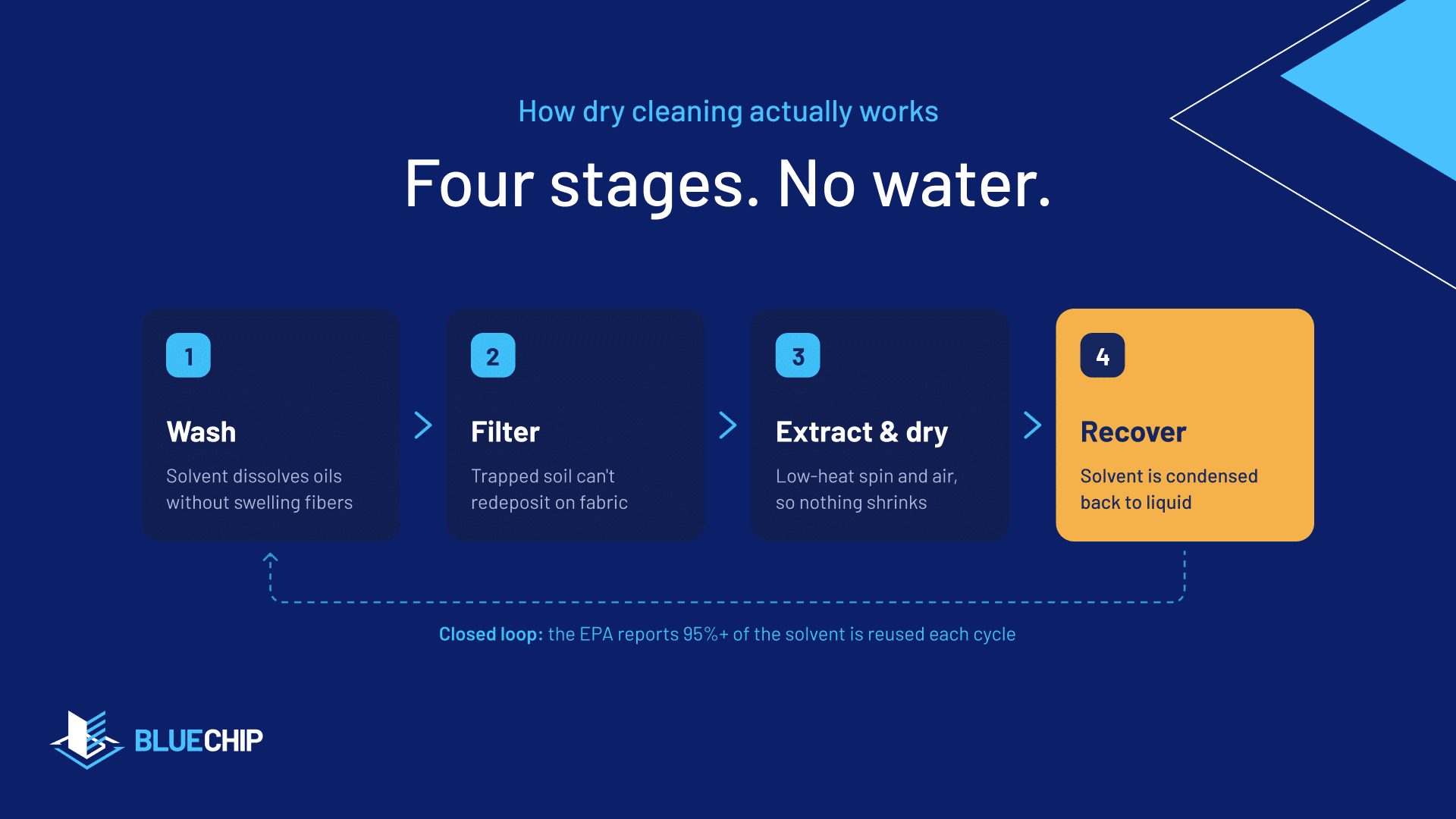
In the first stage, garments enter a machine that resembles a large industrial washer. The system fills with a liquid solvent instead of water. These chemicals effectively break down non-polar contaminants like oils and grease that standard detergents miss. According to the Drycleaning & Laundry Institute, mechanical agitation helps the solvent enter the fabric. It lifts soil from the fibers without swelling the threads. This protects the structural integrity of your property’s specialized fabrics.
As the cycle runs, the solvent moves through a filtration system. This step is vital for maintaining quality. The filters trap suspended soils and pigments so they do not redeposit onto the clothing. This level of precision ensures that clothes emerge cleaner than they would in a standard wash. This focus on filtration mirrors high-standard janitorial services where removing grit is the only way to prevent surface damage.
W. Edwards Deming was an engineer who helped rebuild Japanese manufacturing after World War II. He believed quality should be built into the process. It should not be checked only at the end. He said it plainly:
“Quality is everyone’s responsibility.” – W. Edwards Deming
Once the wash is complete, the machine enter a high-speed spin cycle to extract the liquid. This process is similar to professional commercial carpet cleaning methods where moisture removal is necessary to protect the material. After extraction, the machine circulates warm air to evaporate the remaining solvent. Because these solvents have a lower boiling point than water, the machine uses lower temperatures. This prevents the heat damage and shrinkage common in home dryers.
Modern machines use a closed-loop design to capture and reuse the solvent. As the liquid evaporates, it moves through a condenser to be cooled back into a liquid state. Data from the EPA shows that modern systems recycle over 95% of the solvent used. This makes the process cost-effective and reduces environmental liability. Many providers now pair this with green commercial cleaning protocols. This helps create the safest possible environment for your building occupants.
Theodore Roosevelt set the standard for stewardship over a century ago. It still applies to facility decisions made today:
“Do what you can, with what you have, where you are.” – Theodore Roosevelt
Blue Chip Building Maintenance has spent 25 years perfecting facility care in the NYC area. We believe that professional maintenance is an investment in your company’s reputation. If you need a partner who understands the technical details of office care, Blue Chip Building Maintenance is ready to help. Contact us today to schedule a walk-through.
© 2026 Blue Chip Building Maintenance | Privacy
This site is protected by reCAPTCHA and the Google Privacy Policy and Terms of Service apply.