Smart building owners know that a clean floor is the first thing a visitor notices. Maintaining that standard across 100,000 square feet represents a significant operational bottleneck for facility managers. The solution uses autonomous technology to handle high traffic volumes and keep maintenance costs under control. In the NYC metro area, the cobotics model pairs human skill with robotic speed. It helps meet APPA cleaning standards without raising budgets.
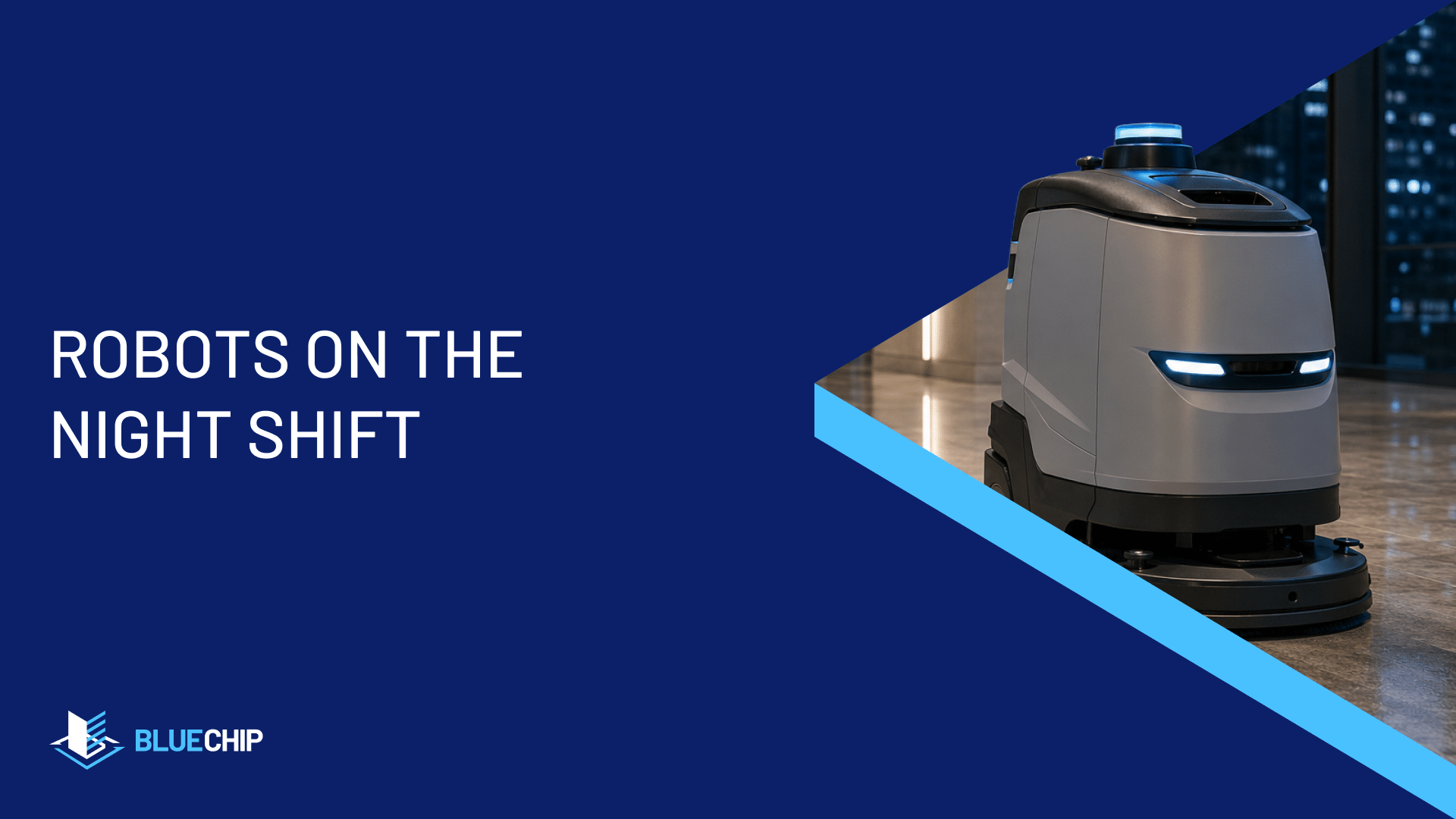
Effective facility management requires more than just turning on a machine. New technologies must be integrated with established maintenance guidelines to ensure consistent quality across different environments. Autonomous floor scrubbers are most effective when they are treated as part of a broader engineering control system. This ensures the machine’s mechanical action matches the needs of your VCT or natural stone flooring.
Cynthia Breazeal, the MIT roboticist whose work on social robotics reshaped how modern industries think about human-machine collaboration, put the case for thoughtful integration as clearly as anyone:
“Robots are tools, but tools that can also be teammates.” – Cynthia Breazeal, MIT Personal Robots Group
According to ANSI, these systems work best when integrated into existing facility management automation protocols to reduce human error. When used correctly, these machines help keep indoor air clean by reducing dust and particles left by manual mopping. Proper air quality NYC standards are easier to hit when your floor care routine is consistent and machine-validated.
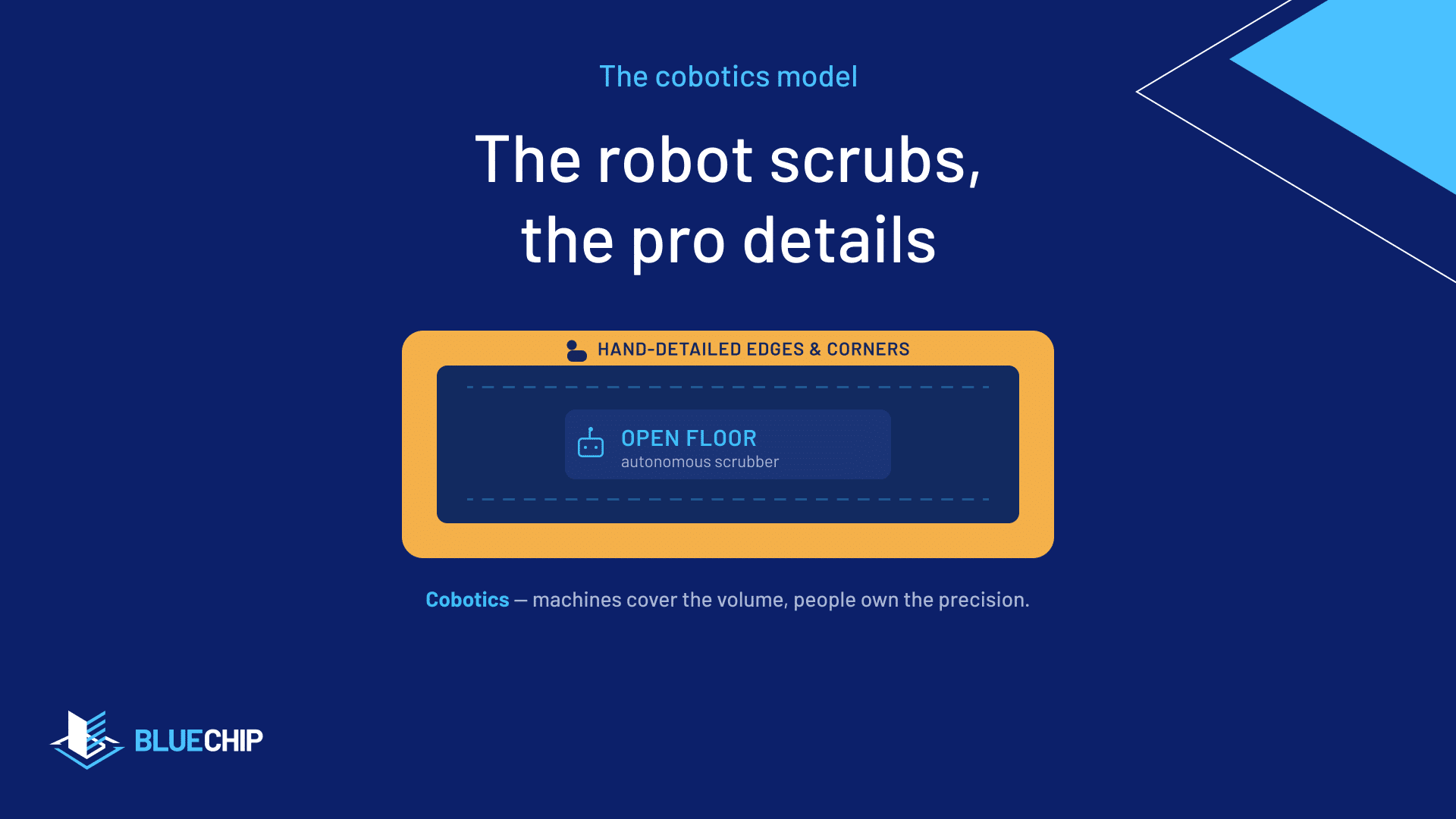
High-volume, low-complexity tasks like scrubbing long hallways are perfect for automation. This offloading allows your professional staff to focus on technical detailing that machines cannot replicate. While a robot handles the open floor, a skilled person can focus on edges, corners, and industrial floor care in tight spaces. This hybrid approach ensures that no area of the building is neglected.
Self-performed labor is critical for managing robotic fleets effectively. Unlike subcontractors, W-2 employees are trained on specific facility SLAs and can troubleshoot equipment without service gaps. Direct employment models provide the accountability and lower risk required to manage expensive autonomous assets. When a machine encounters an obstacle, a trained on-site professional can resolve the issue immediately.
Amy Edmondson, the Harvard Business School professor whose research on operational teaming defined how modern organizations think about high-stakes human-machine work, said it in a line every facility director should read before signing a contract:
“Teaming is the engine of organizational learning.” – Amy Edmondson, Harvard Business School
Robots are tools that require professional oversight to protect long-term asset health. Using the wrong brush pressure or chemistry on natural stone flooring can cause permanent damage. Professional management ensures that autonomous floor scrubbers are programmed for the specific needs of your surfaces. This technical precision prevents the premature wear of VCT and stone finishes in high-density environments.
Blue Chip Building Maintenance has provided expert facility care for over 25 years in the NYC metro area. We understand that professional floor maintenance is a vital part of your overall asset protection strategy.
Isaac Asimov, whose I, Robot laid the ethical framework for how modern industries think about human-robot collaboration, said something worth pinning to every 25-year facility partnership adapting to new technology:
“The saddest aspect of life right now is that science gathers knowledge faster than society gathers wisdom.” – Isaac Asimov
To ensure your facility remains in peak condition, contact Blue Chip Building Maintenance today to schedule a walk-through.
%
© 2026 Blue Chip Building Maintenance | Privacy
This site is protected by reCAPTCHA and the Google Privacy Policy and Terms of Service apply.